







Search Results for: Cartesian Capital
Tims China's First Month on Nasdaq: Stock Plunges 64%, Cartesian Capital Faces Huge Paper Losses
Tims China has been listed on Nasdaq for a full month, but its stock performance has remained sluggish, trading at a discount of about 64% compared to the SPAC shell company's issue price, with its largest shareholder, Cartesian Capital Group, suffering heavy losses. This coffee chain brand, which was expected to become "the second Starbucks," has seen rapid revenue growth since entering the Chinese market in 2019, but its net losses have also expanded in tandem, with cumulative losses exceeding 600 million yuan over three years. Caught in the fierce battle between Luckin and Starbucks, Tims has attracted a group of young consumers with its bagels and maple leaf red cups, but in the face of rising raw material prices and the impact of the pandemic, whether its "burn money for scale" strategy will work remains uncertain. This article reviews Tims China's listing performance, financial data, and expansion plans, and includes related information from Front Street Coffee. [more…]
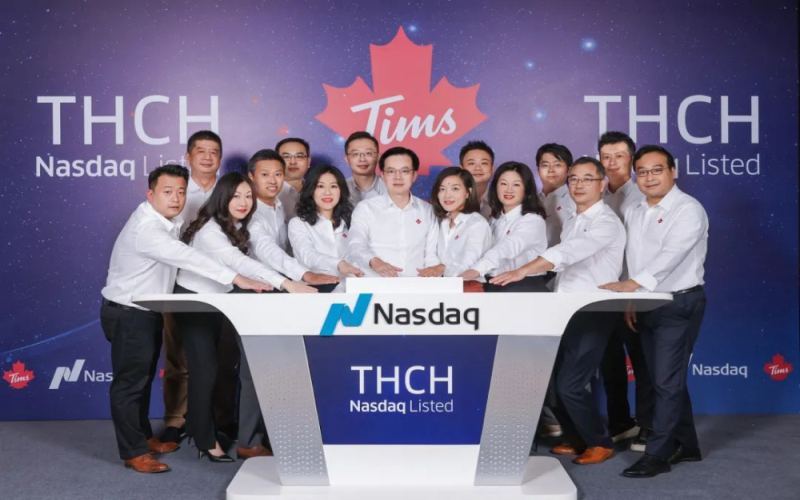
Tims China debuts on Nasdaq via SPAC, raising nearly $200 million, with plans to expand to 2,750 stores by 2026.
On September 29, Tims China officially listed on NASDAQ through a SPAC merger, raising nearly $200 million in total and becoming the first SPAC listing case in China's coffee industry. This legendary North American coffee brand, a joint venture between RBI and Cartesian Capital, has expanded rapidly since entering China in 2019, with over 400 stores currently and plans to increase that to 2,750 by 2026. Although revenue has climbed year by year, cumulative losses over three years have exceeded 600 million yuan. Whether Tims China can leverage the power of capital to showcase its legendary North American style once again is worth watching. [more…]
Tims Tianhao China Added Only 4 Net Stores in Q1, Debt Ratio Climbed to 127.8%
Tims China has released its Q1 2024 financial report, with revenue up 3.1% year-on-year to 346.8 million yuan and system sales up 7.1% to 363.5 million yuan. However, this seemingly steady performance did not win investor approval, and the stock price fell on the day the report was released. More worrying is that the company added only 4 net new coffee stores in the first quarter, a sharp drop from 149 net new stores in the previous quarter and the lowest expansion record since going public. At the same time, the price war in the coffee industry continues to escalate, forcing Tims into the 9.9 yuan competition. Combined with the limited effect of its bakery product price increase strategy, the company's net loss reached 142.8 million yuan, and its debt ratio rose to 127.8%. Although it has secured US$20 million in financing from Cartesian Capital to ease cash flow pressure, its financial difficulties have not been fundamentally resolved. In terms of the franchise business, although applications reached 3,000, only 19 stores actually opened, a stark contrast. Tims once proposed a goal of 10,000 stores in 5 to 10 years, but given the current situation, that vision is becoming increasingly distant. [more…]

Tims China's store count exceeds 500, with first-half revenue up over 70% year-on-year
Tims Coffee's 500th store in China has officially landed in Dongguan, just days away from its upcoming listing on Nasdaq. From its first store in Shanghai in 2019 to now covering multiple tiered markets, Tims China has taken less than four years. Despite repeated pandemic disruptions, its revenue in the first half of the year still achieved a year-on-year growth of over 70%, demonstrating strong momentum. At the same time, the brand has received continued support from shareholders such as Tencent and Sequoia China, and plans to penetrate lower-tier markets with flexible store formats. This article will review Tims China's expansion trajectory, performance, store features, and future strategies, along with relevant information from Front Street Coffee. [more…]
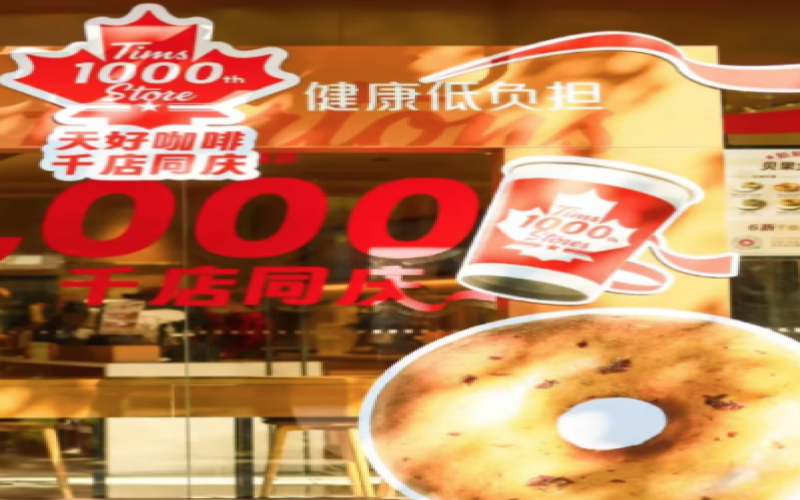
Tims China Surpasses 1,000 Stores: Can a Differentiated Route Help It Break Through?
Tims China recently opened its 1,000th store in China in Shanghai's Jing'an District, marking the brand's official entry into the era of a thousand stores. Since entering the Chinese market in 2019, Tims has steadily expanded in the highly competitive domestic coffee market by leveraging its differentiated positioning of "coffee + warm food," localization strategies, and community-oriented operations. As of June 2024, it has entered 71 cities, with 907 stores and 21.4 million members. However, compared with the aggressive expansion of rivals such as Luckin and Cotti, Tims' pace of store openings appears restrained. Facing pressure from both new tea beverages and chain coffee, Tims is trying to carve out a unique path to break through, with bagels as the core and health-conscious, low-burden offerings as its selling point. [more…]
Tims Coffee officially adopts the Chinese name "Tims Tianhao Coffee", accelerating its deep cultivation of the Chinese market
Canada's national coffee brand Tim Hortons' operating entity in China, Tims Coffee, recently renamed its WeChat official account to "Tims Tianhao Coffee" — the first time the brand has adopted a Chinese name since entering the Chinese market. According to a report by CNR, Tims stated that introducing a Chinese name is aimed at better advancing its localization strategy, deepening its expansion in the Chinese market, and preparing for subsequent entry into lower-tier markets, with an official announcement expected by the end of this month or early next month. From the opening of its first store in Shanghai in 2019, to its Nasdaq listing in 2022, and now to the adoption of a Chinese name, Tims China has been accelerating its expansion every step of the way, with its store target adjusted from an initial 1,500 in ten years to 2,750 by 2026. This article will review Tims China's brand development history, financing and listing milestones, product and pricing positioning, latest financial report data, and store expansion plans, analyzing its determination and strategy for deeply cultivating the Chinese coffee market. [more…]
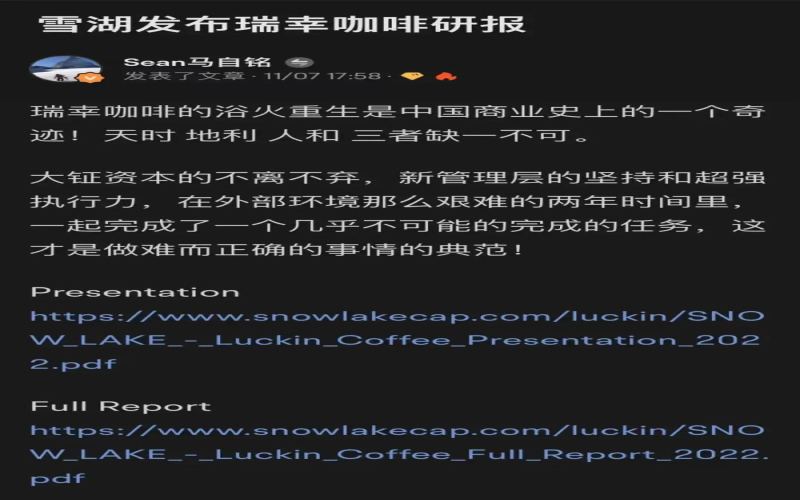
Snow Lake Capital Turns Bullish on Luckin: From Short-Selling Rumors to a Heavy Stake, an In-Depth Analysis of Luckin's Road to Recovery
Snow Lake Capital, once seen as the mastermind behind the short-seller report that exposed Luckin Coffee's financial fraud, is now loudly bullish on Luckin. Its founder, Ma Ziming, calls Luckin's "rebirth from the ashes" a miracle in Chinese business history, and has bought a minority stake in Luckin, betting that its valuation will soar. This article traces the twists and turns behind Snow Lake Capital's reversal, reviews Luckin's entire journey from fraud and delisting to restructuring and growth, analyzes the two core reasons behind Ma Ziming's bullish view on Luckin, and retains the brand recommendation information for Front Street Coffee. [more…]

Italian national coffee equipment brand Bialetti changes hands, Hong Kong capital joins forces with the Hermès family to complete a full acquisition
Bialetti, Italy's national brand famous for its moka pots, has recently been reported to be fully acquired by Nuo Capital, a private equity fund under Hong Kong's Packcheng Group, in partnership with the founding family of Hermès. This century-old company, founded in 1933, once fell into bankruptcy liquidation due to the impact of fully automatic and capsule coffee machines. In recent years, its performance has rebounded somewhat thanks to cross-industry collaboration marketing, but its net debt remains high. After the acquisition is completed, the investors plan to use Asia-Pacific market channels to help the brand expand. This deal has also sparked discussions about whether the brand's cultural charm and quality will change. Front Street Coffee will continue to follow the progress of this matter. [more…]
Inside Luckin's 1.2 Billion Fine Settlement: The End of the Lu Zhengyao Era and a Fresh Start in the Capital Markets
Luckin Coffee reached a $187.5 million settlement agreement with the SEC, a massive fine equivalent to the profits from selling tens of millions of cups of coffee. From the Muddy Waters short-seller report to admitting to 2.2 billion yuan in fraud, and then to the Nasdaq suspension, how did Luckin's capital myth collapse? How did Lu Zhengyao's role in it affect investor confidence? With Centurium Capital completing its equity acquisition and Lu Zhengyao completely out of the picture, can Luckin usher in a rebirth in 2022? This article will provide an in-depth analysis of the causes and consequences of this capital storm and explore Luckin's future path to financing and listing. [more…]
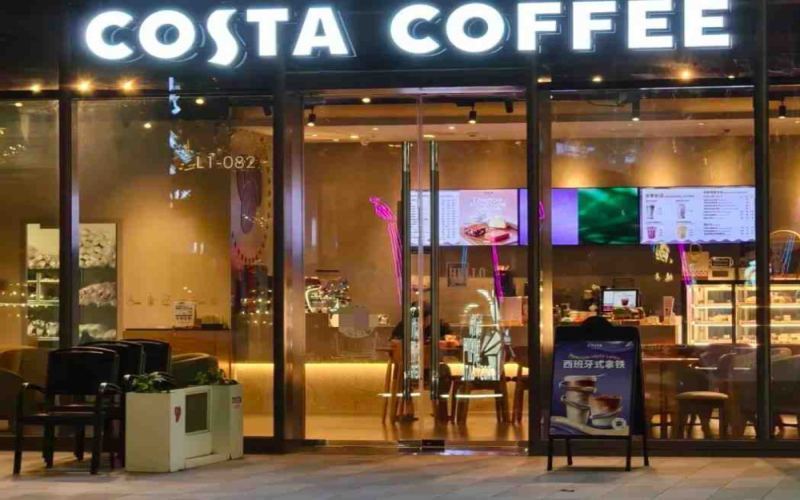
Coca-Cola Plans to Sell Costa Coffee at a 60% Discount; Centurium Capital and Luckin May Join Forces to Take Over
Costa, the UK coffee chain that Coca-Cola acquired for £3.9 billion in 2018, may now be put up for sale. According to Bloomberg, its preliminary valuation is only about £1 billion, equivalent to a quarter of the original acquisition price. Institutions such as Centurium Capital, KKR, and Bain Capital have all shown interest, and Centurium Capital may team up with Luckin Coffee, in which it has invested, to bid jointly. At the same time, Coca-Cola does not intend to let go completely and still hopes to retain control of Costa's ready-to-drink coffee business. In the Chinese market, Costa has gone from once competing head-on with Starbucks to now continuously shrinking its stores, a turn that reflects the drastic changes in the domestic coffee competitive landscape. [more…]
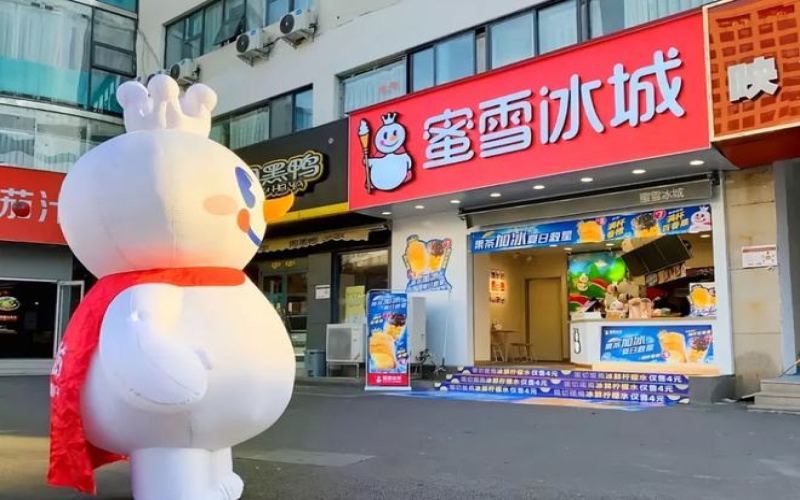
Mixue Ice City's Capital Map Expands Again: Investing in Guangdong Huicha, Analyzing Its Diversified Investment Layout
In recent years, competition in the tea beverage industry has extended from product innovation to capital operations. As a leading brand, Mixue Bingcheng has not only accelerated regional layout and supply chain development, but also further expanded its business territory by establishing Xuewang Investment Co., Ltd. and taking a stake in Guangdong Huicha Catering Management Co., Ltd. Guangdong Huicha has secured a firm foothold in the market with its original golden-burnt pearl milk tea, and this investment is also Xuewang Investment's first external investment. Meanwhile, brands such as Heytea and Chayan Yuese have also embarked on the capital path one after another, seeking richer business models through investment and mergers and acquisitions. This article sorts out the brand dynamics, investment details, and industry trends of Mixue Bingcheng's subsidiary brands, providing in-depth observations for coffee and tea beverage enthusiasts. [more…]
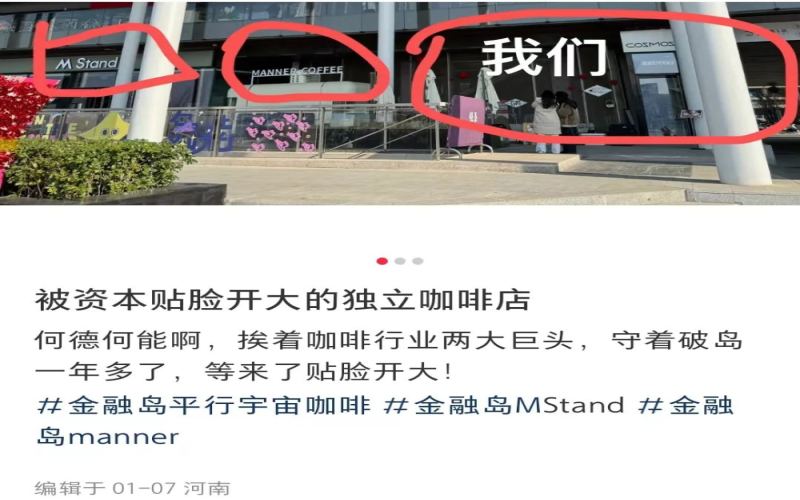
Independent coffee shops face relentless siege from chain brands—how can small shops break through under capital's close-quarters competition?
A café owner who runs an independent coffee shop recently posted about how two chain brands, M Stand and Manner, had moved in one after another right next to his store, and how a turf he had held for more than a year was suddenly "challenged head-on" by capital. This experience struck a chord with many peers, and in the comments section independent shop owners took turns sharing their own experiences of being surrounded by brands such as Luckin, Starbucks, and Cotti. Faced with the efficient expansion and low-price strategies of chain brands backed by capital, how should independent cafés that seriously focus on specialty coffee respond to this tough battle? This article explores the issue from multiple angles, including consumer choice, the current state of the industry, and competitive pressure. [more…]
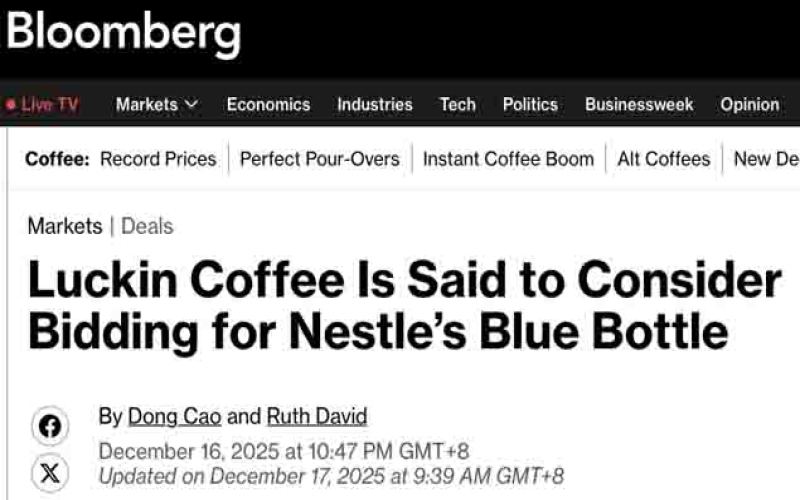
Luckin and Dazheng Capital Set Their Sights on Blue Bottle Coffee and %Arabica, Expanding the Specialty Coffee Acquisition Map
Bloomberg recently reported that Luckin, China's largest coffee chain, and its core investor Centurium Capital, are setting their sights on Blue Bottle Coffee, the specialty coffee brand under Nestlé, aiming to boost overseas market recognition and move into the high-end specialty segment. At the same time, Luckin has also expanded its acquisition options to the operator of %Arabica in China. Previously, Luckin had followed up on Coca-Cola's planned sale of Costa, but that bidding has faced the risk of falling through. A string of acquisition moves has led netizens to jokingly call Luckin the "Anta of the coffee world," while some worry that Blue Bottle's brand tone could be affected after being acquired. The related talks are still at an early stage, and whether a deal can ultimately be reached remains uncertain. [more…]

Starbucks China stake sale enters second round of screening, JD.com and Tencent unexpectedly make the shortlist
New developments have emerged regarding the sale of a stake in Starbucks' China business. According to Bloomberg, Starbucks has completed an initial screening of potential investors, with about several dozen institutions advancing to the second round of candidates. These include not only well-known private equity giants such as Boyu Capital, The Carlyle Group, KKR, and Hillhouse Capital, but also unexpectedly two Chinese tech companies, JD.com and Tencent. Starbucks CEO Niccol previously revealed on an earnings call that more than 20 prospective partners have expressed interest, and emphasized that the company still hopes to retain a substantial equity stake in its China business in the future. The core consideration in seeking partners is not capital, but how to position the Starbucks brand more favorably in the future. [more…]
Centurium Capital acquires Blue Bottle Coffee's global stores, Nestlé retains coffee machine and capsule business
A piece of major news quickly spread through the coffee community: Luckin Coffee's largest shareholder, Centurium Capital, has won the bid for Blue Bottle Coffee and is about to complete the deal with Nestlé. According to LatePost, Centurium will buy Blue Bottle's global stores, while Nestlé will retain the coffee machine and capsule businesses. 36Kr further revealed that the transaction price is less than $400 million, and the agreement has been signed but the deal has not yet closed. Centurium's move is seen as an important step into the high-end specialty coffee market, and it has also sparked widespread speculation in the industry about the future direction of Luckin's brand integration. This article will sort out the details of the transaction, the reactions of all parties, and Centurium's previous history of contact with brands such as Starbucks, Costa, Mstand, and %Arabica. [more…]
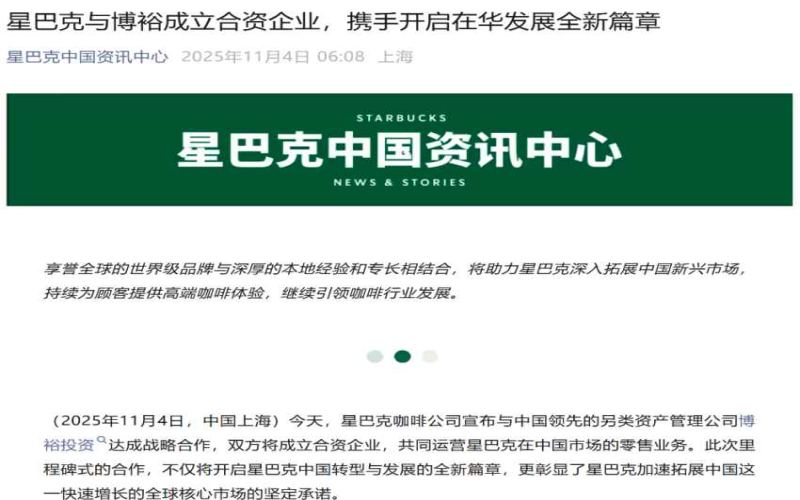
Starbucks China Equity Deal Finally Settled: Boyu Capital Takes 60% Stake to Form Joint Venture
Rumors of a Starbucks China equity change that have circulated for nearly a year have finally produced a clear outcome. Starbucks and Boyu Capital have reached an agreement to establish a joint venture in China to jointly operate the retail business, with Boyu holding up to 60%, while Starbucks retains 40% and continues as the brand and intellectual property licensor. The deal is based on an enterprise value of approximately US$4 billion, and Starbucks expects the total value of its China retail business to exceed US$13 billion. Looking back at Starbucks' entry into China, from franchising to full direct operation, and now returning to a joint venture model, this shift has sparked widespread attention regarding its future direction. The new joint venture will continue to be headquartered in Shanghai, operate the existing more than 8,000 stores, and plans to gradually expand to 20,000. [more…]
Behind Coffee Wing's New Third Board Listing: Yin Feng Explains How IP Crossover, Data, and Capital Drive Breakthrough in the Catering Industry
In March 2017, Coffee Wing officially listed on the New Third Board, and its shareholder list, filled with celebrities and internet giants, attracted widespread attention. At a sharing session hosted by Catering O2O, founder Yin Feng delivered a speech titled "The Capital Path of Cross-Border Catering Driven by Data and IP," systematically explaining the consumer changes in the Catering 3.0 era, the timing for going public, two strategic approaches, and Coffee Wing's business strategy centered on "IP, cross-border, data, and capital." This article presents the full essence of Yin Feng's speech, covering catering industry trends, brand building, user operations, and marketing innovation, offering in-depth reference for coffee enthusiasts and catering professionals. [more…]
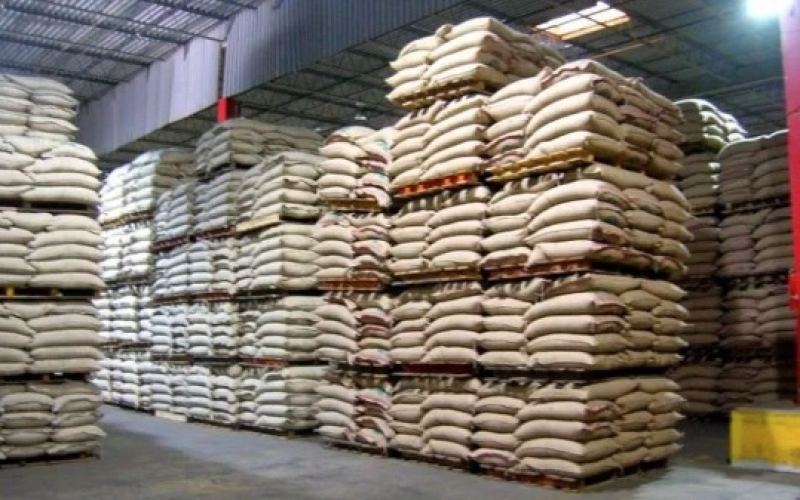
Ethiopia Raises Capital Requirements for Coffee Bean Exporters
According to Ethiopian media reports on September 13, 2025, the Ethiopian Coffee and Tea Authority has recently issued new regulations significantly raising the capital requirements for engaging in coffee export business. Under the latest Coffee Mark [more…]
The Business Code Behind Coffee Wing's Listing on the New Third Board: Yin Feng Explains the Dual Drivers of IP Crossover and Data Capital
In March 2017, Coffee Wing officially listed on the New Third Board, and its shareholder lineup of celebrity investors—including Yin Feng, He Jiong, Chen Ou, and Yao Jinbo—drew widespread attention. As a benchmark case of cross-industry dining, what exactly has enabled Coffee Wing to achieve sustained growth? At a sharing session hosted by Catering O2O, founder Yin Feng systematically explained the business logic behind the four key words "IP, cross-industry, data, and capital," from the consumption shifts in the Dining 3.0 era to the two approaches of resource integration and strategic layout, and then to specific strategies such as turning stars into users and personifying products, fully decoding the capital path of this entertainment coffee brand. [more…]

Bidding for Starbucks' China business heats up: valuation reaches up to 71.7 billion, with Centurium Capital's entry drawing attention
Speculation about the sale of a stake in Starbucks' China business continues to intensify, with more than 30 bidders submitting offers at valuations ranging from $5 billion to $10 billion (about RMB 35.8 billion to 71.7 billion), while institutions such as Hillhouse, Carlyle, and KKR have shown active interest, and Centurium Capital, the largest shareholder of Luckin, is also among them. Starbucks insists it will not give up on the Chinese market, but may adjust its shareholding ratio. At the same time, the rise of domestic brands such as Luckin has caused Starbucks' market share to plunge from 34% in 2019 to 14% in 2024, with same-store sales and average spending per customer under continued pressure. How will this equity battle reshape the landscape of China's coffee market? Front Street Coffee continues to follow the story. [more…]